
Powered by Bravenet Bravenet Blog

Tag Board

This tag board is currently empty.

Please type in the four characters shown in the black box.

Friday, April 6th 2012

7:14 AM

Chiropractic Marketing Tip - Simplest way to Increase Your Patient-Base

The easiest possible chiropractic marketing method to increase your chiropractic patient-base is ironically quite obvious, yet so few chiropractors do it. You can instantly improve your number of active chiropractic patients by simply regaining your inactive patients.

Based on Jay Abraham, often referred to as America's Highest Paid Marketing Consultant, "Most people stop buying from you [getting chiropractic care] for just one of three reasons:

1. Something totally unrelated for you happened in their life that caused these to stop dealing with you. They meant to chiropractic marketing come back, but they've just never gotten around to taking action and doing business with you again.

2. They'd a problem or unsatisfying last purchase experience [office visit] with you they probably didn't even tell you about. So they're switched off to you or your company [office].

3. Their situation has changed enough where they no more can benefit from whatever product or service you sell."

Obviously, number 3 doesn't apply to chiropractors since everyone can chiropractic marketing take advantage of care with an on-going basis. So, we're playing two of the three reasons for why patients stop getting care with you.

Once again, according to Abraham, "Over one-half of the client attrition I see may be the result of loyal, satisfied clients who only intended to temporarily stop doing business [getting care] but never quite got around to starting back up again."

Between those patients and the other people who possibly had a single poor experience of your workplace - for whatever reason - and you should quickly observe that about 80% of your lost patients didn't leave for an irreparable reason. And, with the right contact chiropractic marketing approach, you can easily win a significant percentage them back into your chiropractic office, adding a nice boost for your weekly PV.

Begin with a chiropractic advertising campaign that contacts inactive patients and honestly, humbly and sincerely expressing your heartfelt concern for his or her well-being. Your whole reason for concentrate this contact (and the entire chiropractic advertising campaign) should be on them and their well-being. This is not on you and your office.

After expressing your sincere concern, question them, "Is anything wrong?". "Have we done anything at work to offend or upset you?"

Continue allowing them realize that the whole office staff would welcome them back with open arms... and in fact... would be prepared to extend a no cost office visit if that's what it would decide to try demonstrate to them how important their well-being would be to you.

You can do this over the telephone, via direct mail, or - like I recommend - via email.

The beauty with chiropractic marketing such as this with email is the fact that a multi-touch reactivation campaign could be fully automated. When a patient goes inactive, your workplace staff can take 2 seconds to trigger the mult-step reactivation campaign, and a series of reactivation emails can get sent to the lost patient over a series of weeks.

Done, like I've shared, it is simple to and frequently consistently see over 50-60% of your lost patients return for care for this type of chiropractic advertising campaign.
0 Comment(s) / Post Comment

Tuesday, October 25th 2011

8:38 AM

Glasgow

City and administrative headquarters of Glasgow City unitary authority, situated on the river Clyde in southwest Scotland, 67 km/42 mi west of Edinburgh; population (2001) 577,900. The town is the administrative, social, and service centre for that Glasgow conurbation, which extends from Gourock around the west to Carluke on the east; it is thus one of several largest continuously built-up areas in great britain. The biggest city in Scotland, Glasgow was once one of several world's great shipbuilding areas, however the companies are in decline. Regardless of this, the location is still the UK's fourth-largest manufacturing centre. The service sector is becoming increasingly important, and Glasgow was the third-most visited city in the UK in 2000.

Glasgow Directory

There has been a settlement here since St Mungo found its way to the 6th century to convert the Strathclyde Britons. St Mungo formed a bishopric throughout about 543, however it had not been until 1178 that Glasgow appeared a burgh of barony by William the Lion, plus it became a royal burgh under James VI in 1636. The Union of Scotland and England in 1707 brought increasing prosperity. Inside 18th century, do business with south america for tobacco, sugar, and cotton was important, and also by 1775 the city's prosperity was at its height. The commercial revolution from the Nineteenth century caused the shipbuilding industry to produce rapidly. What's more, it resulted in an important influx of migrants from Ireland along with the Scottish Highlands to find work, to ensure by 1811 Glasgow was the second-largest city in the uk. This resulted in a time of intense tenement building, and also the city endured overcrowding and unsanitary conditions. During World War II, Glasgow and Clydeside suffered severe bomb damage - in Clydebank only seven houses were left undamaged. Since then an urban motorway has become built that runs through and also over the city (such as the high Kingston Bridge), and it is construction involved major demolition and reconstruction from the greater part in the inner city. Since 1945, Glasgow's heavy industries have gradually declined. However, Glasgow has improved its image like a tourist destination, the European Capital of scotland - Culture in 1990, as well as the 1999 UK Town of Architecture and Design.
0 Comment(s) / Post Comment

Tuesday, October 25th 2011

8:35 AM

Glasgow Directory

City and administrative headquarters of Glasgow City unitary authority, upon the river Clyde in southwest Scotland, 67 km/42 mi west of Edinburgh; population (2001) 577,900. Town may be the administrative, social, and service centre for the Glasgow conurbation, which extends from Gourock about the west to Carluke on the east; it is thus among the largest continuously built-up areas in the uk. The most important city in Scotland, Glasgow was previously one of the world's great shipbuilding areas, nevertheless the market is in decline. Not surprisingly, town is still the UK's fourth-largest manufacturing centre. The service sector has grown to be increasingly important, and Glasgow was the third-most visited city in the UK in 2000.

Glasgow Directory

There was a settlement here since St Mungo found its way to the 6th century to convert the Strathclyde Britons. St Mungo formed a bishopric here in about 543, but it wasn't until 1178 that Glasgow is made a burgh of barony by William the Lion, and yes it became a royal burgh under James VI in 1636. The Union of Scotland and England in 1707 brought increasing prosperity. Within the Eighteenth century, invest south america for tobacco, sugar, and cotton was important, and also by 1775 the city's prosperity was at its height. The industrial revolution from the Nineteenth century caused the shipbuilding industry to produce rapidly. In addition, it led to a major influx of migrants from Ireland as well as the Scottish Highlands to discover work, to ensure that by 1811 Glasgow was the second-largest city in the uk. This generated a time period of intense tenement building, as well as the city experienced overcrowding and unsanitary conditions. During Wwii, Glasgow and Clydeside suffered severe bomb damage - in Clydebank only seven houses were left undamaged. Ever since then an urban motorway may be built that runs through and over the city (such as the high Kingston Bridge), as well as construction involved major demolition and reconstruction of the greater part from the inner city. Since 1945, Glasgow's heavy industries have gradually declined. However, Glasgow has improved its image like a tourist destination, called the European Town of Culture in 1990, along with the 1999 UK City of Architecture and Design.
1 Comment(s) / Post Comment

Tuesday, October 25th 2011

12:00 AM

Welcome to your new Bravenet Blog.

  • Mood: Excited!
You can maintain your blog by logging in to your Bravenet account. Once you are logged in you can customize the layout, colors, and features. In addition, you can add your own links, edit your profile, add your friends, and change many other options to personalize your blog.

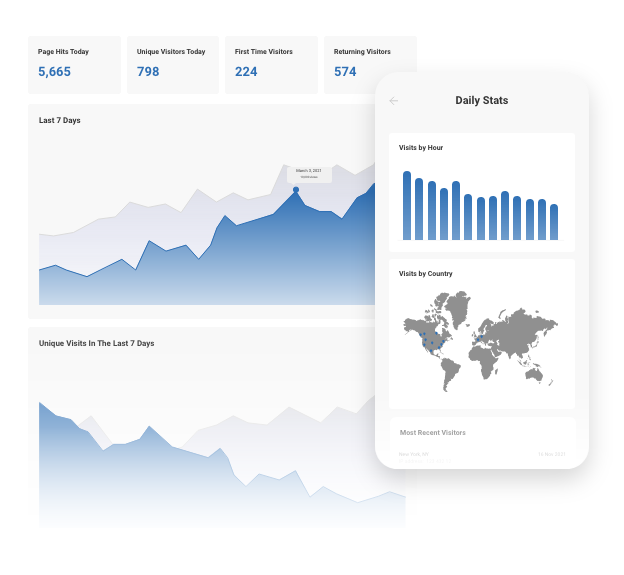
Once you begin using your blog, you can view statistics in your members area to see how many people are reading your blog as well as where they come from.

We hope you enjoy your Blog. Be sure to tell all your friends about this great new service from Bravenet!
0 Comment(s) / Post Comment